800 Homes Destroyed, Around 4,000 Serbs Displaced: 22 Years Since the Pogrom against Serbs in Kosovo and Metohija
Foto: AP/Pier Paolo Cito
Twenty-two years have passed since the March pogrom against Serbs in Kosovo and Metohija. It all began with a report by the Kosovo public broadcaster, which the day before falsely claimed that Serbs were responsible for the drowning of three Albanian boys in the Ibar River.
That report, on March 17 and 18, triggered a wave of violence against Serbian civilians, their property, and religious sites. According to data from the Humanitarian Law Center, 23 people were killed: one Macedonian, nine Serbs, and 13 Albanians.
Six towns and nine villages were ethnically cleansed, and more than 4,000 Serbs were forced to leave their homes. A total of 35 churches and monasteries were desecrated or completely destroyed.
In cooperation with the Belgrade Nikola Tesla Airport and technological partners SITA and IER, Air Serbia has implemented new self-service check-in kiosks and automated baggage drop-off stations.
The President of Serbia, Aleksandar Vucic, stated that the government will send Air Serbia planes to bring back Serbian citizens from the Middle East who wish to evacuate, as soon as the airspace in that region opens for civilian flights.
The central commemoration was held in Gracanica, where a memorial service was conducted at the monastery, a wreath was laid at the memorial site, and an exhibition dedicated to the March pogrom was opened.
At the commemorative academy, speakers addressed the horrors and consequences of the violence. Metropolitan of Raska and Prizren Teodosije expressed regret over the disappearance of Serbs from many towns, while also stressing the need to persevere in preserving heritage and holy sites.
"Much that is old has been lost, but it has been restored. We are witnesses that no evil or violence can force us to renounce the heritage left to us by our ancestors", Teodosije said.
He emphasized that reconstruction does not refer only to buildings but also to the spiritual life of the community, and that Kosovo can be lost only if people themselves renounce their identity and heritage.
"We can lose Kosovo and Metohija only if we ourselves renounce it",he added.
“The consequences are devastating”
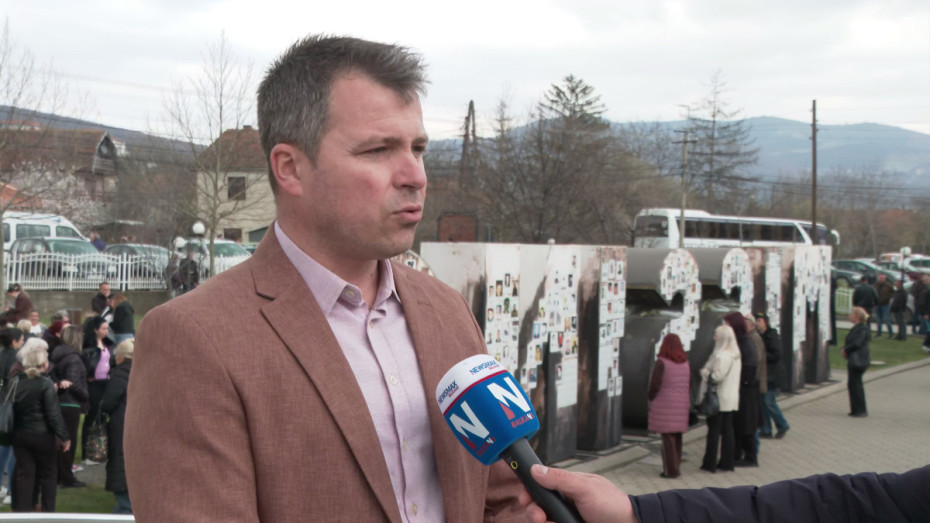
Historian Marko Markovic told Newsmax Balkans that Serbs will never forget the violence of 2004, as images of arson, displacement, and suffering are deeply etched into the collective memory.
“The consequences of the March pogrom are also devastating, not only for the village where I still live, but across the entire territory of Kosovo and Metohija,” the historian said.
Printscreen: Newsmax BalkansMarko Markovic
An exhibition was also opened in the building of the former city museum, dedicated to this tragic event as a reminder of the suffering and a warning to future generations.
This day remains deeply rooted in the collective consciousness of Kosovo Serbs as a symbol of suffering, but also of perseverance in preserving their identity and faith.
“Citizens will simply go to ATMs and withdraw money, and that does not lead to higher inflation. Americans do not like sanctions to be circumvented in a crude manner. When we tried to replace ownership, they told us, ‘Do you really think we don’t know that?’ The same applies to circumventing sanctions through Dina cards. Banks issuing those cards could very quickly come under U.S. sanctions themselves,” Stevanovic told Newsmax Balkans.
Newsmax se bavi temama, a ne pukim prenošenjem informacija. Informišemo, ali želimo i da objasnimo, analiziramo, istražimo. Osvrnućemo se na izazove i prilike s kojima se suočavamo, analizirajući kako se aktuelna dešavanja reflektuju na naš svakodnevni život. Kroz razgovore sa stručnjacima i akterima iz različitih oblasti, pružićemo dublji uvid u važne teme koje se tiču politike, ekonomije, obrazovanja i društvene pravde. Pridružite nam se u ovoj analizi i saznajte više o pitanjima koja su važna za sve nas.
vesti
15:30
TRAŽIM REČ
Koliko trenutno traje prosečan postupak usvojenja u Srbiji? Zašto dolazimo u situaciju da usvojenje traje godinama, dok istovremeno imamo decu koja čekaju svoju porodicu? Koliko se u praksi zaista poštuje princip „najboljeg interesa deteta“ i ko ga konkretno procenjuje? Kako objasniti situacije u kojima deca ostaju u hraniteljskim porodicama godinama bez trajnog rešenja, a postoje zainteresovani usvojitelji? Za emisiju “Tražim reč” govore Dragana Krstić Šansa za roditeljstvo, specijalni pedagog Stevan Popović, v. d. direktorke Centra za porodični smeštaj i usvojenje Beograd Danijela Spajić, usvojiteljke Silvana Veselinović I Milica Dukić i hraniteljka Ivana Ivić.
specijal
17:00
INFORMATIVNA EMISIJA-VESTI
Najvažnije vesti dana iz zemlje, regiona i sveta. Kratko, jasno i provereno.
vesti
17:15
NAŠA PRIČA
Jutarnji program „Otvori oči“ gledaocima nudi analizu aktuelnih dešavanja od prethodnog dana i najavu predstojećih događaja uz analizu eminentnih stručnjaka i renomiranih gostiju. Emisija nudi uvid u aktuelna pitanja, uz kvalitetne analize i inspirativne price naših dopisnika I reportera koji će se uvek naći “na pravom mestu u pravo vreme”.
specijal
17:30
STAV REGIONA PODGORICA
Kako je Crna Gora proslavila dve decenije od obnove nezavisnosti? Živi li Crna Gora evropski san ili robuje starim podelama? Crna Gora ni nakon 20 godina nema sređen birački spisak. Iz Ministarstva unutrašnjih poslova poručuju da su utvrdili brojne nepravilnosti upoređujući podatke sa popisa stanovništva i biračkog spiska. Poznavaoci prilika u ovoj oblasti vide brojne sporne odredbe u predloženom novom zakonskom rešenju. Crnogorske inspekcije pojačale su nadzor u svim opštinama uoči špica letnje turističke sezone. Koliko država godišnje gubi novca zbog sive ekonomije, šta sve inspektori pronalaze na terenu i kakav je epilog brojnih slučajeva u toj oblasti? Ovo su u Stavu regiona bila neka od pitanja za ministra u Vladi Crne Gore i koordinatora svih inspekcija Milutina Butorovića.
specijal
18:00
INFORMATIVNA EMISIJA-PRESEK
Newsmax se bavi temama, a ne pukim prenošenjem informacija. Informišemo, ali želimo i da objasnimo, analiziramo, istražimo. Osvrnućemo se na izazove i prilike s kojima se suočavamo, analizirajući kako se aktuelna dešavanja reflektuju na naš svakodnevni život. Kroz razgovore sa stručnjacima i akterima iz različitih oblasti, pružićemo dublji uvid u važne teme koje se tiču politike, ekonomije, obrazovanja i društvene pravde. Pridružite nam se u ovoj analizi i saznajte više o pitanjima koja su važna za sve nas.
U jednom buretu, otkopanom u Inđiji u prisustvu javnih tužilaca, policije i forenzičara, pronađeno je telo za koje se veruje da bi moglo da pripada nestalom A. N, saopštilo je Više javno tužilaštvo u Beogradu, čime je potvrđeno nezvanično saznanje portala Newsmax Balkans.
Tokom sezone prehlada i gripa mnogi posebnu pažnju posvećuju jačanju imuniteta, a jedan od važnih minerala za pravilno funkcionisanje organizma je cink. Osim što doprinosi jačanju imunološkog sistema, cink ima važnu ulogu i u brojnim drugim procesima u telu.
Veliki požar koji je izbio na jednom splavu na Adi Ciganliji je lokalizovan. Požar se proširio na šest objekata, a četiri su potpuno izgorela, nezvanično saznaje portal Newsmax Balkans.
Predsednik Srbije Aleksandar Vučić je, govoreći o raspisivanju vanrednih parlamentarnih izbora, rekao za Radio-televiziju Srbije da će oni biti održani u periodu od septembra do novembra.
Po nalogu Višeg javnog tužilaštva u Nišu uhapšeno je sedam osoba iz Bora i Beograda zbog sumnje na zloupotrebe prilikom organizacije međunarodne sportske manifestacije 2021. godine, kojima je, kako se sumnja, pribavljena korist od pet miliona dinara.
The Speaker of the National Assembly of Serbia, Ana Brnabic, stated that according to data from Eurostat, Serbia, together with Cyprus, was the fastest-growing economy in Europe in the first quarter of this year.
The President of Serbia, Aleksandar Vucic, speaking about the calling of snap parliamentary elections, told Radio Television of Serbia that they would be held sometime between September and November.
Serbian President Aleksandar Vucic held talks with Ukrainian Deputy Prime Minister Taras Kachka regarding a free trade agreement, stronger economic cooperation, and energy issues, emphasizing that there is significant room for expanding the partnership between the two countries.
European Commissioner for Enlargement Marta Kos assessed that the adoption of four electoral laws in the Serbian Parliament represents an important step toward free and fair elections, and announced continued cooperation with the authorities on the remaining reforms.
The President of the Republic of Serbia, Aleksandar Vucic, will pay an official visit to the People’s Republic of China from May 24th to 28th, according to a statement issued by the President’s Media Cooperation Office.
The Director of the Office for Kosovo and Metohija, Petar Petkovic, stated that the plans to establish a Kosovo Gendarmerie were announced as part of Albin Kurti’s election campaign, emphasizing that KFOR remains the only legitimate armed force in Kosovo.
Unknown individuals broke the entrance door of the Serbian medical clinic in the village of Banjska, near Vucitrn, and the sight of shattered glass and damage was discovered by a clinic employee who arrived for work this morning, the Office for Kosovo and Metohija announced.
President of Serbia Aleksandar Vucic said that cities are environments where creativity, innovation, and the diverse talents of young people are encouraged, and where new ideas and solutions are developed to improve the everyday lives of communities.
Serbian President Aleksandar Vučić said in Baku that the opposition should unite for the next elections, while regarding the Senjak investigation he stated that there are no grounds to suspect that former Belgrade police chief Veselin Milić was involved in the criminal offense.















Komentari (0)