NATO attack on Yugoslavia began on this day 27 years ago: Bombing lasted 78 days, more than 3,500 victims
Foto: Srđan Ilić
On this day 27 years ago, March 24th , 1999, at 7:53 PM, the attack on the Federal Republic of Yugoslavia began, carried out without the approval of the UN Security Council.
In the first wave, more than 20 targets were hit, and the first missiles struck a barracks in Prokuplje, soldier Boban Nedeljkovic was killed.
During the 78 days of bombing, 1,031 members of the army and police were killed, while more than 5,000 were wounded. Around 2,500 civilians were killed, including 89 children, and about 6,000 were injured.
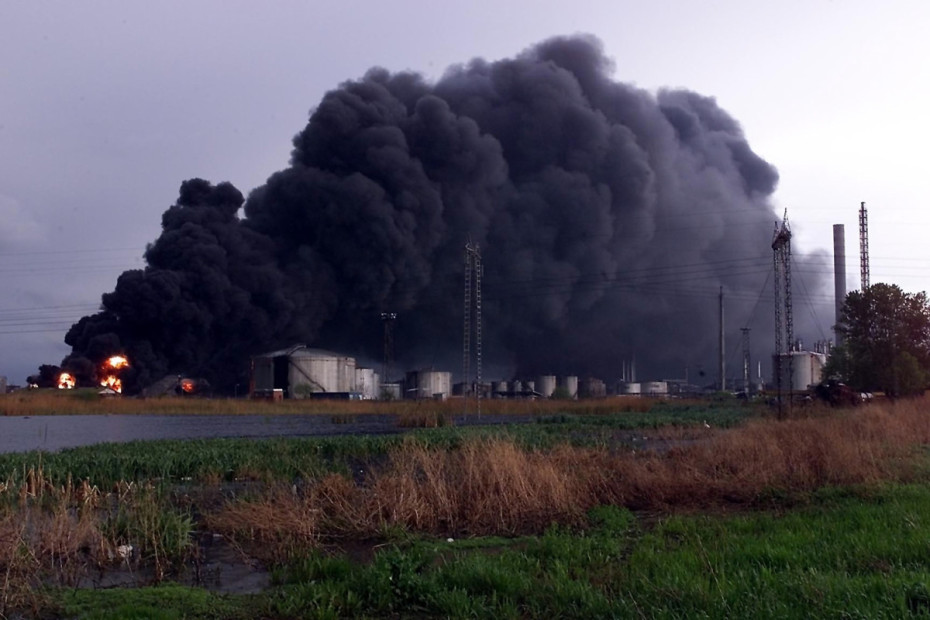
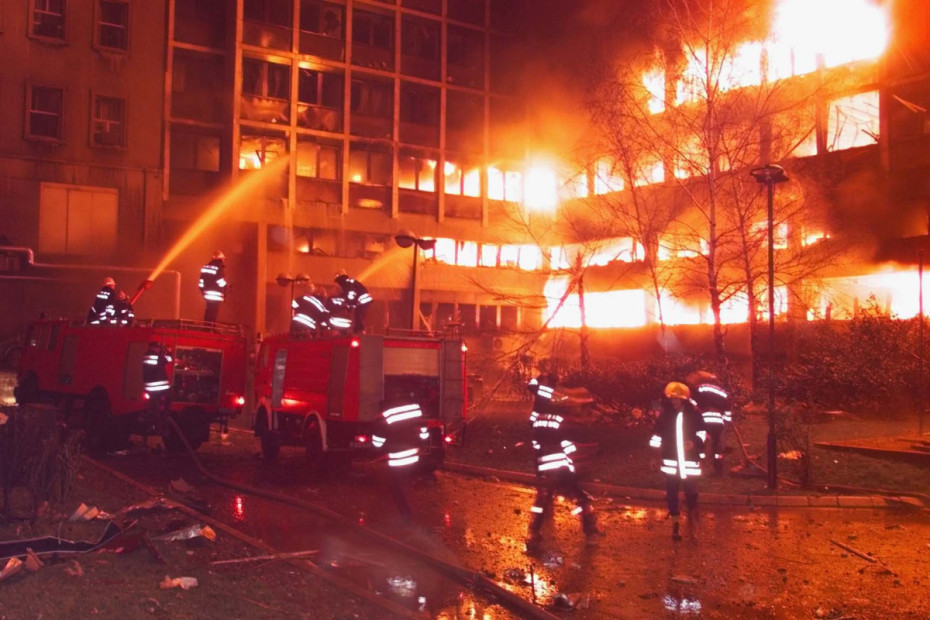
The destruction was enormous: bridges, roads, factories, schools, hospitals, and media buildings were destroyed.
Tens of thousands of facilities were damaged, and the total damage was estimated at around $100 billion. During 11 weeks of aggression, NATO dropped 22,000 tons of projectiles, including 37,000 banned cluster bombs and those filled with depleted uranium.
Minister of Defense Bratislav Gasic stated that the conditions have been created for the reintroduction of mandatory military service, which will last 75 days, and that the start of service will depend on global developments and circumstances, either beginning in December of this year or in March 2.
The President of the Republic of Serbia, Aleksandar Vučić, met in Abu Dhabi with the President of the United Arab Emirates, Sheikh Mohamed bin Zayed Al Nahyan, and on that occasion emphasized that Serbia stands in solidarity with the friendly people of the Emirates in these difficult circumstances.
A large part of the country’s infrastructure was destroyed, including industrial facilities, schools, healthcare institutions, media houses, cultural monuments, churches, and monasteries. Altogether, it is estimated that about 50% of Serbia’s production capacity was affected.
Around 25,000 residential buildings were destroyed or damaged, 470 kilometers of roads and 595 kilometers of railway lines were rendered unusable.
Fourteen airports, 19 hospitals, 20 health centers, 18 kindergartens, 69 schools, 176 cultural monuments, and 44 bridges were damaged, while 38 were destroyed.
Vucic in Vranje on the Day of Remembrance
The President of the Republic of Serbia, Aleksandar Vucic, will attend the marking of the Day of Remembrance for those killed in the 1999 NATO aggression in Vranje.
The Day of Remembrance will be observed at the plateau in front of the National Museum Gallery starting at 7:30 PM.
Causes and escalation of the conflict
As the reason for the intervention, NATO cited a humanitarian crisis in Kosovo and Metohija, while events in Racak and the failure of negotiations in Rambouillet and Paris served as immediate triggers.
During 1998, clashes intensified, with attacks by the KLA and responses by security forces, further escalating the situation.
Although threats of military intervention had existed since the early 1990s, the NATO attack on the FRY was effectively prepared during 1998.
Foto: Srđan Ilić
In the book Modern Warfare, Wesley Clark did not hide that planning for the NATO attack on the FRY was "well underway by mid-June 1998".
In the spring of 1998, the border area of the municipalities of Decani and Djakovica was a zone of mass terrorist activities by the KLA.
Decani was under siege for months, without electricity and telephone connections, and heavy fighting took place in April and May.
At the beginning of June, the KLA announced mobilization, which included mandatory enlistment of all Albanians aged 18 to 55, indicating an armed uprising.
Foto: Srđan Ilić
According to the Yugoslav Army General Staff, in the first wave on March 24th, more than 20 facilities were targeted.
The first missiles struck at 7:53 PM on the barracks in Prokuplje, where soldier Boban Nedeljkovic, the first victim of the aggression, was killed.
Strikes followed on Pristina, Kursumlija, Batajnica, and Strazevica. At the same time, transmitters and communication systems on Jastrebac and elsewhere were targeted, as well as Strazevica in Rakovica.
End and consequences
On May 27th, 1999, during the height of the aggression against the FRY, the International Criminal Tribunal for the former Yugoslavia issued indictments and arrest warrants for Slobodan Milosevic, Milan Milutinovic, Nikola Sainovic, Dragoljub Ojdanic, and Vlajko Stojiljkovic for alleged crimes in Kosovo and Metohija.
The bombing ended on June 10th, 1999, after the signing of the Military-Technical Agreement near Kumanovo and the order to cease attacks.
The consequences were long-lasting, human losses, destruction, and serious environmental and economic problems that are still felt decades later.
Jutarnji program „Otvori oči“ gledaocima nudi analizu aktuelnih dešavanja od prethodnog dana i najavu predstojećih događaja uz analizu eminentnih stručnjaka i renomiranih gostiju. Emisija nudi uvid u aktuelna pitanja, uz kvalitetne analize i inspirativne price naših dopisnika I reportera koji će se uvek naći “na pravom mestu u pravo vreme”.
specijal
15:00
INFORMATIVNA EMISIJA-PRESEK
Newsmax se bavi temama, a ne pukim prenošenjem informacija. Informišemo, ali želimo i da objasnimo, analiziramo, istražimo. Osvrnućemo se na izazove i prilike s kojima se suočavamo, analizirajući kako se aktuelna dešavanja reflektuju na naš svakodnevni život. Kroz razgovore sa stručnjacima i akterima iz različitih oblasti, pružićemo dublji uvid u važne teme koje se tiču politike, ekonomije, obrazovanja i društvene pravde. Pridružite nam se u ovoj analizi i saznajte više o pitanjima koja su važna za sve nas.
vesti
15:30
NAŠA PRIČA
Jutarnji program „Otvori oči“ gledaocima nudi analizu aktuelnih dešavanja od prethodnog dana i najavu predstojećih događaja uz analizu eminentnih stručnjaka i renomiranih gostiju. Emisija nudi uvid u aktuelna pitanja, uz kvalitetne analize i inspirativne price naših dopisnika I reportera koji će se uvek naći “na pravom mestu u pravo vreme”.
specijal
16:00
GrađaНИН (R)
GrađaНИН sa Aleksandrom Timofejevim je emisija informativnog karaktera u kojoj autor, inače glavni i odgovorni urednik NIN-a, razgovara sa kolegama i gostima o aktuelnim temama kojim se već punih 90 godina bavi ugledni NIN, najstariji nedeljnik na Balkanu i šesti po „krštenici“ u Evropi. Gosti dolaze iz različitih sfera interesovanja publike i autora. Nema tabu tema i što je možda najvažnije u ovim vremenima velike podeljenosti u Srbiji, emisija prati uredjivačku politiku NIN-a, a to je da ima sagovornike sa svih strana kako iz politike tako i svega ostalog iz zemlje, regiona i sveta važnog za život gradjana Srbije. GrađaНИН је еmisija koja prati život, postavlja pitanja, dobronamerno kritikuje i trudi se da nam svako danas bude bar malo bolje nego juče, a svako sutra bolje nego danas.
specijal
17:00
INFORMATIVNA EMISIJA-VESTI
Najvažnije vesti dana iz zemlje, regiona i sveta. Kratko, jasno i provereno.
vesti
17:10
STAV REGIONA
Pregled ključnih dešavanja u Bosni i Hercegovini, Crnoj Gori i Severnoj Makedoniji. Relevantni gosti analiziraju i komentarišu teme koje oblikuju svakodnevicu u celom regionu. Pitamo one koji donose odluke, proveravamo sve što građane interesuje sa jasnim stavovima o političkim i društvenim promenama i izazovima.
Skup u organizaciji studenata u blokadi, koji se pod sloganom "Ti i ja, Slavija, jer studenti pobeđuju" održava na Trgu Slavija u Beogradu, počeo je oko 18.20 obraćanjem predstavnice studentskog pokreta.
U Beogradu postoje dve do tri hiljade pčelinjih društava ili rojeva koji se slobodno kreću, rekao je za portal Newsmax Balkans predsednik Beogradskog društva pčelara Stanko Rajić. Iako će ova informacija mnogima zvučati dramatično, Rajić uverava da je panika oko rojeva pčela samo puko neznanje.
Na prostoru između Starog dvora i zgrade Predsedništva Srbije, u Ulici kralja Milana, došlo je do incidenta nakon završetka studentskog skupa na Trgu Slavija, javlja reporter Newsmax Balkans. Ministar policije Ivica Dačić saopštio je oko 22.15 da su u neredima privedene 23 osobe.
Interior Minister Ivica Dacic stated that during the incidents following the May 23 gathering in Belgrade, 17 police officers were injured and 47 individuals were brought to Interior Ministry premises, including one person holding a diplomatic ID card.
Serbian President Aleksandar Vucic stated that the visit to China is of great importance for Serbia and expressed hope that more than 30 agreements and arrangements will be signed.
The Speaker of the National Assembly of Serbia, Ana Brnabic, stated that according to data from Eurostat, Serbia, together with Cyprus, was the fastest-growing economy in Europe in the first quarter of this year.
The President of Serbia, Aleksandar Vucic, speaking about the calling of snap parliamentary elections, told Radio Television of Serbia that they would be held sometime between September and November.
Serbian President Aleksandar Vucic held talks with Ukrainian Deputy Prime Minister Taras Kachka regarding a free trade agreement, stronger economic cooperation, and energy issues, emphasizing that there is significant room for expanding the partnership between the two countries.
European Commissioner for Enlargement Marta Kos assessed that the adoption of four electoral laws in the Serbian Parliament represents an important step toward free and fair elections, and announced continued cooperation with the authorities on the remaining reforms.
The President of the Republic of Serbia, Aleksandar Vucic, will pay an official visit to the People’s Republic of China from May 24th to 28th, according to a statement issued by the President’s Media Cooperation Office.
The Director of the Office for Kosovo and Metohija, Petar Petkovic, stated that the plans to establish a Kosovo Gendarmerie were announced as part of Albin Kurti’s election campaign, emphasizing that KFOR remains the only legitimate armed force in Kosovo.
Unknown individuals broke the entrance door of the Serbian medical clinic in the village of Banjska, near Vucitrn, and the sight of shattered glass and damage was discovered by a clinic employee who arrived for work this morning, the Office for Kosovo and Metohija announced.















Komentari (0)