IMF: Successful Completion of the Second Review of Serbia’s Arrangement; GDP Growth Expected to Accelerate to 3% in 2026
Foto: AP/Andrew Harnik
The Executive Board of the International Monetary Fund (IMF) today adopted a decision confirming the successful completion of the second review of the implementation of Serbia’s economic program under the Policy Coordination Instrument (PCI), the National Bank of Serbia (NBS) announced.
According to the NBS, the IMF Executive Board noted that, within the framework of the Policy Coordination Instrument, the authorities are implementing key structural reforms and have successfully completed the second program review. It also stated that prudent macroeconomic policies, supported by strong cooperation with the IMF and the accumulation of substantial buffers are helping Serbia navigate the current challenging period.
"The high level of foreign exchange reserves, sizable government deposits, and a resilient, well-capitalized banking sector provide important support in addressing current challenges. Resolving the issue of sanctions on NIS would further reduce uncertainty," as added in the statement.
European Union member states have postponed the decision to open Cluster 3 (Competitiveness and Inclusive Growth). According to the conclusions of the EU Presidency on enlargement, the Council will return to the issue of opening this cluster in line with the negotiating framework.
Brigadier General Antonio Stasi has assumed the position of Head of the NATO Military Liaison Office in Belgrade, succeeding Brigadier General Pierluigi Lodola.
It was also noted that fiscal discipline is being strictly maintained, while monetary policy remains cautious, thereby preserving the credibility of economic policies. Economic activity has slowed due to intensified domestic and external challenges; however, following real GDP growth of around 2% in 2025, growth is expected to accelerate to 3% in 2026 and further to 4.6% in 2027.
IMF Notes That Inflation Has Declined
The IMF Executive Board also noted that inflation in Serbia has declined and fallen below the National Bank of Serbia’s target midpoint of 3%, while the central bank has continued to conduct an appropriate monetary policy.
It was emphasized that the continuation of prudent policies is essential for preserving policy credibility going forward. The fiscal deficit is expected to remain below the agreed limit of 3% of GDP—the program’s key anchor supported by controlled current spending, strict adherence to fiscal rules governing public-sector wages and pensions, and careful prioritization of investments.
"Serbia Is Pursuing Sound Economic Policy"
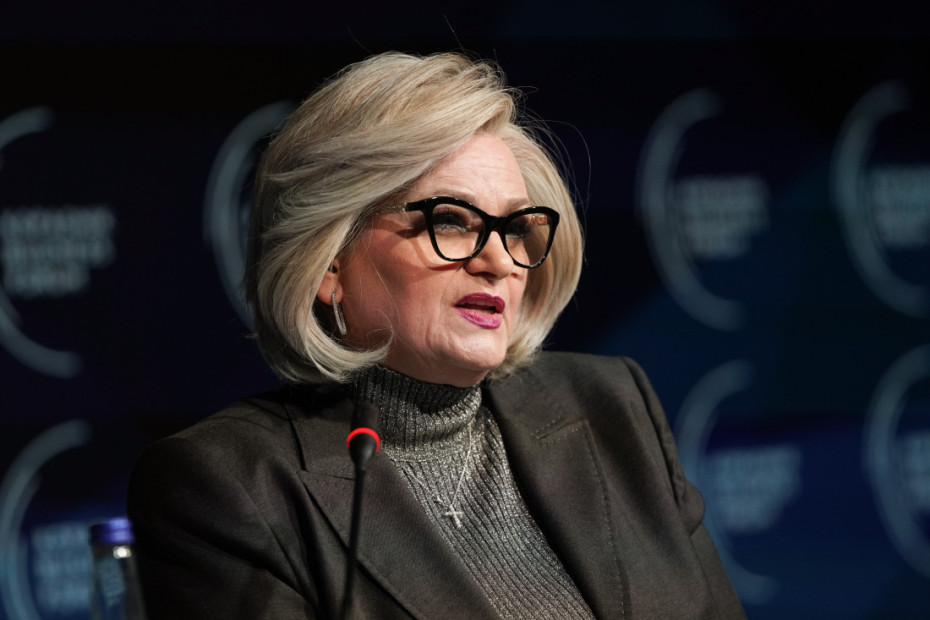
With such discipline, the statement emphasized, fiscal space will be preserved to respond to shocks and support further reductions in public debt. NBS Governor Jorgovanka Tabakovic said that this assessment by the IMF Executive Board, as well as previous ones, demonstrates that Serbia is pursuing sound economic policy, having built significant buffers and demonstrated strong management under shock conditions.
Foto: Tanjug/Strahinja Aćimović
"The reserves we have built are a guarantee of stability in a period of pronounced global uncertainty. We have ensured and maintained a relatively stable dinar-to-euro exchange rate, as well as record-high foreign exchange reserves. We have also significantly increased our gold reserves, which now account for around 20% of our total foreign exchange reserves. The banking sector is stable and highly capitalized, with non-performing loans at a minimum," she said.
"Banking Sector Is Strong"
The NBS statement further notes that Governor Tabakovic emphasized the IMF’s assessment that monetary policy is appropriate and the banking sector strong. The continuation of a cautious monetary policy and a resilient financial sector will remain key pillars in a period of heightened uncertainty, alongside projected inflation expected to remain within the NBS target range.
"This is yet another confirmation that the National Bank of Serbia is conducting sound monetary and prudential policy, in coordination with other policies and stakeholders within our ecosystem," she concluded.
The NBS recalled that the current Policy Coordination Instrument was approved for Serbia on 9 December 2024 for a period of 36 months. The instrument is advisory in nature and does not envisage the use of financial resources. It is granted to countries implementing credible economic policies, with the program reviewed through regular semiannual assessments.
Prikazuje karusel dnevnih objava i najnovijih vesti, sagledanih iz svih uglova. Spoj popularnih priča i najvažnijih vesti koje ostaju vidiljive danima, često inspirisana glavnim događajem dana ili nedelje.
specijal
23:45
DOKUMENTARNI PROGRAM-NEWSMAX ORIGINALS
,,Newsmax Originals’’ je serijal koji donosi najvažnije priče i događaje iz savremene američke istorije, pružajući gledaocima jedinstven uvid u teme koje su oblikovale Sjedinjene Američke Države i njihov uticaj na svet.
Decenijama je malina bila naše "crveno zlato", proizvod po kojem je Srbija bila prepoznata širom sveta. Izvoz vredan stotine miliona evra, desetine hiljada porodica koje su od nje živele i status jednog od najvažnijih srpskih brendova.
Stručni timovi alpinista uklonili su baner sa Palate Albanija u Beogradu, čime će se osloboditi pristup i omogućiti hranjenje mladunaca ptice bele čiope čija se gnezda nalaze na višim spratovima zgrade.
Srpska pravoslavna crkva obeležava jedan od najznačajnih hrišćanskih praznika - dan Svete Trojice, koji se još zove Duhovi i Silazak Svetog duha na apostole.
Izbor novog tuša nije samo pitanje izgleda kupatila, već i prilika da tuširanje prilagodite sopstvenim navikama i potrebama. Bilo da želite osećaj luksuznog spa centra, efekat letnje kiše ili vam je najvažniji kvalitet vode, postoji veliki broj modela koji mogu da odgovore različitim zahtevima.
Grad Čačak je nešto pre ponoći dobio tehničku vodu nakon što su radovi na sanaciji havarije na vodosistemu "Rzav" završeni i pošto je počelo punjenje sistema, potvrđeno je za portal Newsmax Balkans iz Javno-komunalnog preduzeća "Vodovod" Čačak.
Telekom Srbija CEO Vladimir Lucic told that the partnership with U.S. media company Newsmax is a strategically important project aimed at strengthening the company’s presence and coverage across Serbia and the wider Balkans, while also paving the way for expansion into the European market.
Christopher Ruddy, CEO of the American television network Newsmax, told Newsmax Balkans that the partnership with Telekom Srbija is highly significant, as it is one of the largest telecommunications and media companies in the Balkans, which he considers a leading company in Southeast Europe.
Following its successful regional expansion, Newsmax is continuing its growth across Europe with the launch of the new news channel Newsmax Polska, set to begin broadcasting in June.
The U.S. State Department announced that two American companies have been selected to oversee the construction and organization of the U.S. Pavilion at EXPO 2027 Belgrade.
The Holy Belt of the Most Holy Theotokos will remain at the Church of Saint Sava in the Vracar district until Friday, June 5th, Serbian Patriarch Porfirije announced, due to the great interest of worshippers who have been coming for days to venerate this sacred relic.
The first president of the Democratic Party following the restoration of its activities, Dragoljub Micunovic, has died at the age of 95, the party announced.
President of Serbia Aleksandar Vucic stated in Beijing that he hopes some of the Chinese companies he invited during his visit to China to invest in Serbia will do so, assessing that such investments would significantly improve Serbia’s domestic capacities and economy.
Interior Minister Ivica Dacic stated that during the incidents following the May 23 gathering in Belgrade, 17 police officers were injured and 47 individuals were brought to Interior Ministry premises, including one person holding a diplomatic ID card.
Serbian President Aleksandar Vucic stated that the visit to China is of great importance for Serbia and expressed hope that more than 30 agreements and arrangements will be signed.















Komentari (0)