Newsmax Journalist on the Maduro Investigation: Drug Cartels Are “Parallel States,” U.S. launches a global offensive
Printscreen: Newsmax Balkans
The case of Nicolás Maduro, accused of narco-terrorism, according to U.S. journalist Jason Jones, reveals a global network of drug cartels and deep corruption within state structures, and signals a broader U.S. offensive against criminal organizations worldwide.
Newsmax Balkans aplikaciju možete preuzeti sa Google Play i App Store-a.
After a years-long investigation, the United States has charged Venezuelan President Nicolás Maduro with narco-terrorism, a move by Washington that could mark the beginning of a wider crackdown on drug cartels across the globe.
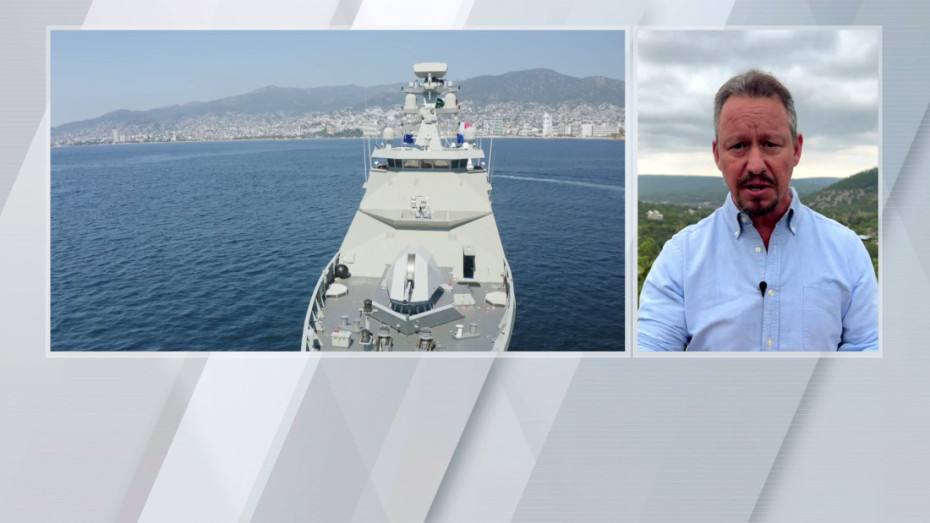
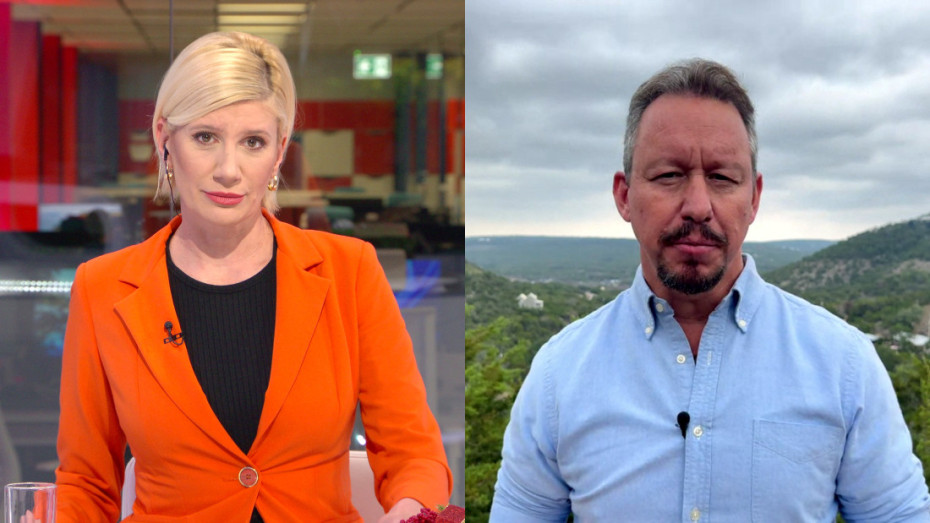
On the scale of this case – and on why it is nearly impossible to dismantle criminal networks operating across multiple continents – Newsmax Balkans spoke with Jason Jones, a journalist with the American outlet Newsmax who covers border issues.
According to Jones, the indictment against Maduro is the result of long-term, coordinated efforts by U.S. security and judicial institutions.
“This investigation is not limited to what Maduro did in Venezuela or South America, but also to his activities worldwide, through cooperation with cartels in Venezuela and Mexico,” Jones says.
As he explains, it was precisely because of these ties that the U.S. Department of Justice and the presidential administration decided to launch a comprehensive investigation. It involved specialized units fighting drug cartels, as well as military and intelligence circles. In parallel, proceedings were conducted related to financial flows in South America, Switzerland, and the United States.
The charges against Maduro carry extremely severe penalties.
President Aleksandar Vucic stated that he hopes Serbia will be able to purchase at least an additional five percent stake in Naftna Industrija Srbije (NIS) in the coming period, which would give the state full oversight and influence over the actions of the majority owner.
First Deputy Prime Minister and Minister of Finance Sinisa Mali stated that major construction works on the Belgrade metro stations are expected to begin this year and announced that the first metro line will be completed by 2030.
“The minimum sentence for narco-terrorism is 20 years. For cocaine trafficking the minimum is 10 years, and if you add weapons possession and conspiracy, we are talking about at least 30 years in prison,” Jones notes.
In his assessment, if convicted, Maduro would almost certainly receive a life sentence.
“Based on intelligence gathered over the past decade, it is very likely that he would serve a sentence for the rest of his life,” our interlocutor is convinced.
Which countries are next?
Venezuela has for years been one of the key transit points for cocaine smuggling from South America to the United States. Asked whether similar U.S. actions could extend to other countries, Jones responds without hesitation.
“Absolutely. We are in a hemisphere facing a serious crisis,” he says, adding that cartels now operate in as many as 65 countries worldwide, with a level of cooperation not seen before.
He singles out Mexico in particular, where in certain regions cartels function as a “parallel authority.”
Jones states the allegations that Jalisco Cartel has ties with the Maduro regime, and that other groups are also part of this network, such as the Cartel of the Suns linked to the military, as well as Colombia’s Clan del Golfo.
Printscreen: Newsmax Balkans
As an illustration of the scale of the problem, he cites Operation Viper, in which the U.S. Departments of Justice and Defense and the Coast Guard seized around 150 tons of cocaine transported across the Pacific and the Caribbean.
“Make no mistake about who’s next. Colombia, the Clan del Gafo, and even the Mexican government can expect much greater pressure in the period ahead,” Jones assesses.
Where does the drug end up, and what are the trends in the U.S.?
Speaking about where the drugs arriving in the U.S. via Venezuela ultimately end up, Jones emphasizes that the consequences affect the entire country.
As a journalist – and as someone who has had insight into concrete operations – he says the scale of trafficking exceeds what the public usually sees.
“I was on a warship when the Mexican navy seized 150 tons of cocaine, over a 13-month period it was more than that. That gives you a picture of what we’re dealing with,” he says.
According to him, although the system has been “flooded” for years, the latest data show a slight decline in drug quantities.
“Since April 2025, the amount of drugs has dropped by about 25%, but these are still preliminary figures,” Jones notes.
The journalist recalls that the United States has lost hundreds of thousands of people to overdoses.
“Official figures speak of around 100,000 deaths per year, but President Trump claims the number is as high as 300,000. Even if the data are unreliable, the scale of the tragedy is indisputable,” the journalist stresses, adding that this is not just an American problem.
Why are cartels so hard to defeat?
The Maduro case reminds many of the arrest of Manuel Noriega in Panama, yet even then the cartels did not disappear. Why, despite everything, are they still so resilient?
“Honestly, it’s not that they’re impossible to dismantle. The problem is the level of corruption in some South American countries. Mexico is a good example, but Maduro may be the most illustrative case,” Jones says.
Printscreen: Newsmax Balkans
He believes the United States made a strategic mistake after September 11 by focusing almost exclusively on global terrorism.
“We neglected problems in our own backyard, and the cartels took advantage of that,” the journalist points out.
Today, he adds, U.S. authorities are surprised by the breadth and scope of these networks, which operate across multiple continents. That is why, according to him, it is crucial that the Donald Trump administration classified these organizations as terrorist groups.
“That provides entirely new tools to dismantle them,” Jones emphasizes on the program Presek.
“Maduro will receive a fair trial”
Although Maduro claims he is innocent and says he was “kidnapped,” Jones believes he will receive a fair trial in the United States.
“The charges against him are enormous, but the U.S. system guarantees a fair trial,” our interlocutor is convinced.
He adds that the entire process will be under intense public scrutiny.
“It will be very interesting to see what comes to light – not only about corruption in South America, but also about how deep this problem runs more broadly,” journalist Jason Jones concludes in his live contribution from Texas.
“This investigation is not limited to what Maduro did in Venezuela or South America, but also to his activities worldwide, through cooperation with cartels in Venezuela and Mexico,” Jones says.
As he explains, it was precisely because of these ties that the U.S. Department of Justice and the presidential administration decided to launch a comprehensive investigation. It involved specialized units fighting drug cartels, as well as military and intelligence circles. In parallel, proceedings were conducted related to financial flows in South America, Switzerland, and the United States.
The charges against Maduro carry extremely severe penalties.
“The minimum sentence for narco-terrorism is 20 years. For cocaine trafficking the minimum is 10 years, and if you add weapons possession and conspiracy, we are talking about at least 30 years in prison,” Jones notes.
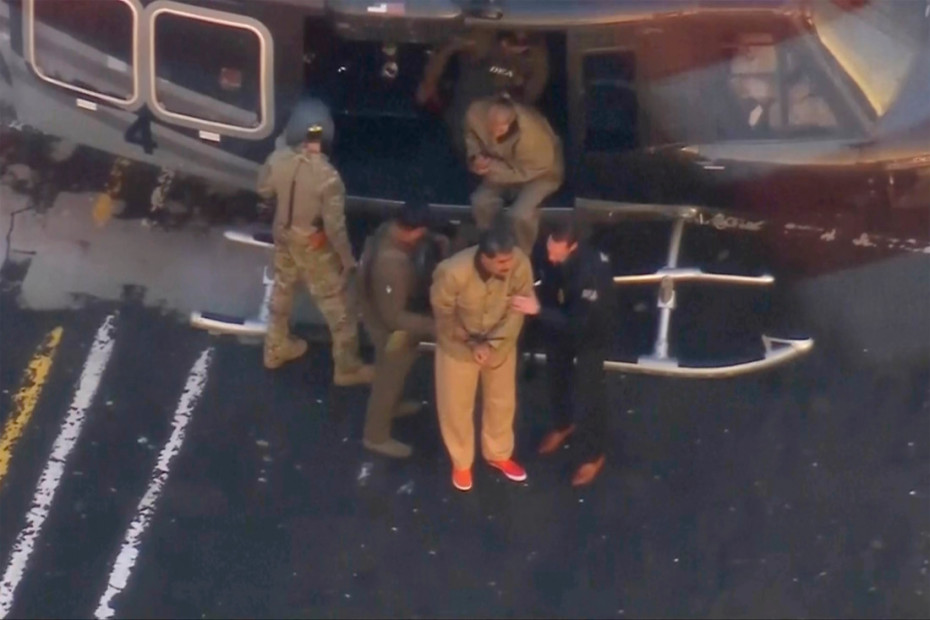
Foto: Fonet/AP/WABCNicolas Maduro
In his assessment, if convicted, Maduro would almost certainly receive a life sentence.
“Based on intelligence gathered over the past decade, it is very likely that he would serve a sentence for the rest of his life,” our interlocutor is convinced.
Which countries are next?
Venezuela has for years been one of the key transit points for cocaine smuggling from South America to the United States. Asked whether similar U.S. actions could extend to other countries, Jones responds without hesitation.
“Absolutely. We are in a hemisphere facing a serious crisis,” he says, adding that cartels now operate in as many as 65 countries worldwide, with a level of cooperation not seen before.
He singles out Mexico in particular, where in certain regions cartels function as a “parallel authority.”
Jones states the allegations that Jalisco Cartel has ties with the Maduro regime, and that other groups are also part of this network, such as the Cartel of the Suns linked to the military, as well as Colombia’s Clan del Golfo.
As an illustration of the scale of the problem, he cites Operation Viper, in which the U.S. Departments of Justice and Defense and the Coast Guard seized around 150 tons of cocaine transported across the Pacific and the Caribbean.
“Make no mistake about who’s next. Colombia, the Clan del Gafo, and even the Mexican government can expect much greater pressure in the period ahead,” Jones assesses.
Where does the drug end up, and what are the trends in the U.S.?
Speaking about where the drugs arriving in the U.S. via Venezuela ultimately end up, Jones emphasizes that the consequences affect the entire country.
As a journalist – and as someone who has had insight into concrete operations – he says the scale of trafficking exceeds what the public usually sees.
“I was on a warship when the Mexican navy seized 150 tons of cocaine, over a 13-month period it was more than that. That gives you a picture of what we’re dealing with,” he says.
According to him, although the system has been “flooded” for years, the latest data show a slight decline in drug quantities.
“Since April 2025, the amount of drugs has dropped by about 25%, but these are still preliminary figures,” Jones notes.
The journalist recalls that the United States has lost hundreds of thousands of people to overdoses.
“Official figures speak of around 100,000 deaths per year, but President Trump claims the number is as high as 300,000. Even if the data are unreliable, the scale of the tragedy is indisputable,” the journalist stresses, adding that this is not just an American problem.
Why are cartels so hard to defeat?
The Maduro case reminds many of the arrest of Manuel Noriega in Panama, yet even then the cartels did not disappear. Why, despite everything, are they still so resilient?
“Honestly, it’s not that they’re impossible to dismantle. The problem is the level of corruption in some South American countries. Mexico is a good example, but Maduro may be the most illustrative case,” Jones says.
He believes the United States made a strategic mistake after September 11 by focusing almost exclusively on global terrorism.
“We neglected problems in our own backyard, and the cartels took advantage of that,” the journalist points out.
Today, he adds, U.S. authorities are surprised by the breadth and scope of these networks, which operate across multiple continents. That is why, according to him, it is crucial that the Donald Trump administration classified these organizations as terrorist groups.
“That provides entirely new tools to dismantle them,” Jones emphasizes on the program Presek.
“Maduro will receive a fair trial”
Although Maduro claims he is innocent and says he was “kidnapped,” Jones believes he will receive a fair trial in the United States.
“The charges against him are enormous, but the U.S. system guarantees a fair trial,” our interlocutor is convinced.
He adds that the entire process will be under intense public scrutiny.
“It will be very interesting to see what comes to light – not only about corruption in South America, but also about how deep this problem runs more broadly,” journalist Jason Jones concludes in his live contribution from Texas.
Jutarnji program „Otvori oči“ gledaocima nudi analizu aktuelnih dešavanja od prethodnog dana i najavu predstojećih događaja uz analizu eminentnih stručnjaka i renomiranih gostiju. Emisija nudi uvid u aktuelna pitanja, uz kvalitetne analize i inspirativne price naših dopisnika I reportera koji će se uvek naći “na pravom mestu u pravo vreme”.
specijal
20:00
INFORMATIVNA EMISIJA-VESTI
Najvažnije vesti dana iz zemlje, regiona i sveta. Kratko, jasno i provereno.
vesti
20:10
BIZLIFE WEEK
Emisija BIZLife week donosi spoj biznisa i života: aktuelne teme, korisne savete, inspirativne priče ljudi koji oblikuju poslovnu budućnost. Kratko, jasno i drugačije. Baš onako kako očekujete od BIZLife-a i Newsmax Balkansa.
specijal
20:30
PROZORI BALKANA
Emisija kolažnog tipa koju čine prilozi naših dopisnika sa zanimljivim pričama iz čitave Srbije, ali i regiona Balkana. Teme nisu vezane za dnevne događaje već obrađuju zanimljive priče iz ugla običnog, malog čoveka, koje su karakteristične za različite krajeve.
special
21:00
SINTEZA
Zašto su se apostoli komunizma pretvorili u nakaze iz snova? Kako su komunisti postali grobari vlastitog dela? Da li je pad Berlinskog zida bio početak, a raspad Sovjestkog Saveza kraj komunizma - odgovore tražimo od novinara Milomira Marića, pisca kultne knjige “Deca komunizma”.
specijal
22:00
INFORMATIVNA EMISIJA-PRESEK
Newsmax se bavi temama, a ne pukim prenošenjem informacija. Informišemo, ali želimo i da objasnimo, analiziramo, istražimo. Osvrnućemo se na izazove i prilike s kojima se suočavamo, analizirajući kako se aktuelna dešavanja reflektuju na naš svakodnevni život. Kroz razgovore sa stručnjacima i akterima iz različitih oblasti, pružićemo dublji uvid u važne teme koje se tiču politike, ekonomije, obrazovanja i društvene pravde. Pridružite nam se u ovoj analizi i saznajte više o pitanjima koja su važna za sve nas.
Policija u Valjevu je u saradnji sa Višim javnim tužilaštvom u tom gradu uhapsila D. V. (49) zbog postojanja osnova sumnje da je izvršio krivično delo iznuda.
Policija u Nišu, u saradnji sa Policijskom upravom u Pirotu, a po nalogu Osnovnog javnog tužilaštva u Nišu, uhapsili su državljanina Bugarske S. B. G. (61) zbog postojanja osnova sumnje da je izvršio krivično delo prevara.
Direktor za komercijalu i strategiju u nacionalnoj avio-kompaniji Er Srbija, Boško Rupić, izjavio je da ne postoji nijedan avio-prevoznik u svetu koji ne oseća aktuelnu krizu u avio-industriji, ali da će kompanija nastaviti da održava prisustvo na tržištima na kojima posluje.
Primena EES sistema Evropske unije izazvala je velike gužve na graničnim prelazima, posebno prema Grčkoj, koja je tradicionalno najpopularnija letnja destinacija za građane Severne Makedonije.
Američki strateški bombarder nove generacije "B-21 Raider", kojeg razvija gigant "Northrop Grumman" za potrebe američkog Vazduhoplovstva (USAF), završio je proces testiranja mnogo brže nego što je bilo planirano.
Telekom Srbija successfully completed an international corporate bond issuance, raising €1.95 billion amid exceptionally strong investor demand that reached $13.87 billion, making this transaction the largest in the region.
Serbian Foreign Minister, Marko Djuric, stated in Brussels that Serbia’s key message at the informal meeting of EU and Western Balkans foreign ministers, was that Europe should accelerate the integration process and open the Schengen Area to the Balkan region as quickly as possible.
Serbian Minister of Domestic and Foreign Trade and EXPO 2027 Commissioner Jagoda Lazarević, U.S. Under Secretary for Public Diplomacy Sarah B. Rogers, and EXPO 2027 Director Danilo Jerić signed an agreement confirming U.S. participation in EXPO 2027 in Belgrade.
The U.S. EXIM Bank has approved financing for the continued development of Telekom Srbija’s 5G network, marking a key step in expanding digital infrastructure and strengthening cooperation with American technology partners.
In Shanghai, a Memorandum of Cooperation was signed between the International Bureau of Exhibitions, the company EXPO 2027 Belgrade, and the World Expo Museum, establishing a framework for cooperation ahead of and during the specialized exhibition in Belgrade.
Documents concerning the design and construction works for the first-class state road "Vozd Karadjordje" - Sector 2 and Sector 3 - were signed in Belgrade, and Serbian President Aleksandar Vucic also attended the signing ceremony.
Truthful and verified reporting, democratic pluralism, and the ability to express freedom of opinion in a dignified manner are the principles with which Newsmax Polska is entering the country’s media landscape, said Executive Producer of Newsmax Polska, Wojciech Surmacz.
Payments within the Single Euro Payments Area (SEPA) scheme are now being introduced in Serbia, enabling non-cash euro payments under the jurisdiction of the National Bank of Serbia to be carried out under favorable conditions across member states of this payment area.


















Komentari (0)